TACT AI
inDJ is creating a friend-like AI that knows you better than you know yourself by collecting and learning data on 500,000 people and over 2.1 billion personal situations and emotions.
The Era of AI as the OS
Connecting People
In an era where AI is connected to all objects and places and operated as an OS, an interface AI that connects OS AI and humans is required.



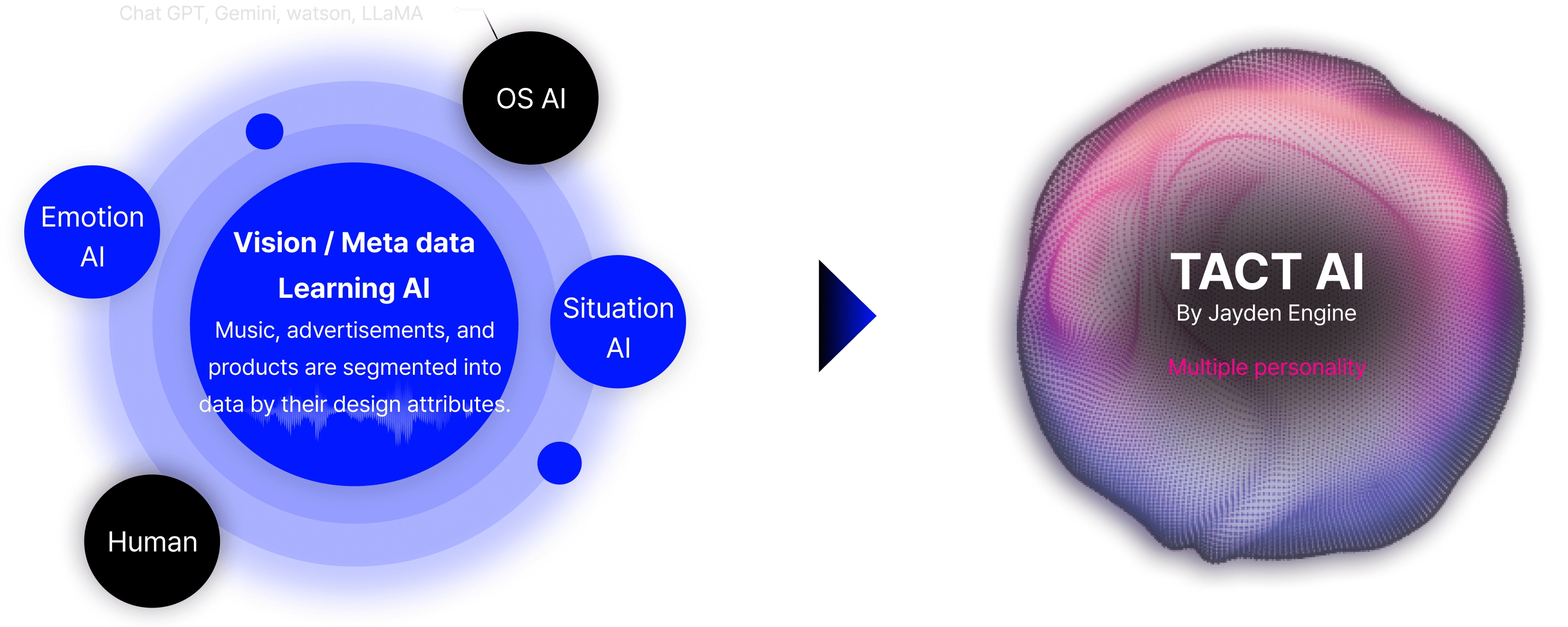
Overview of TACT AI (Noonchee AI)
Our context-aware AI is made up of generative AIs that learn data, context, and emotion.
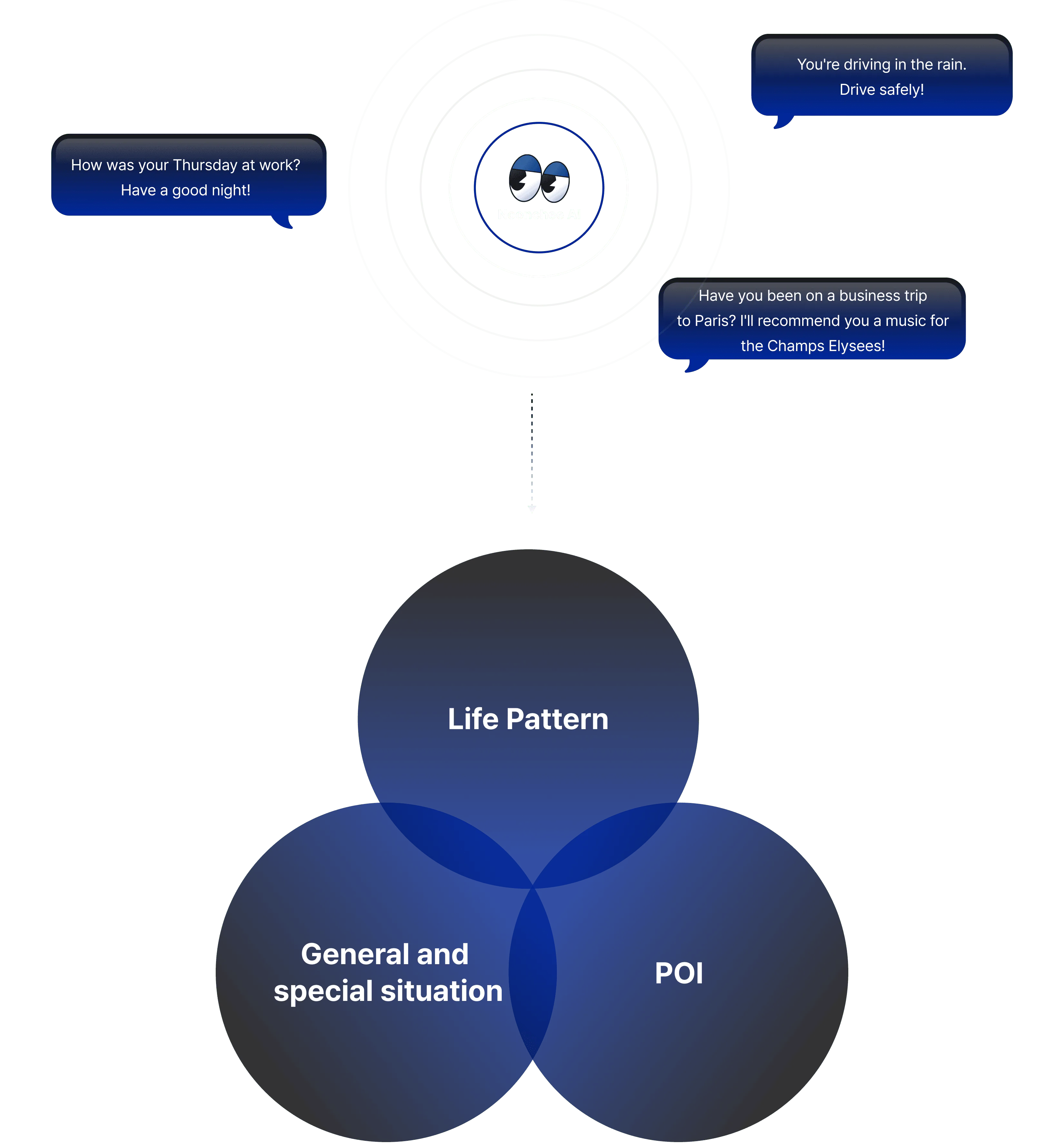
Your Situations!
Based on each sensor data collected from the user's smart devices, IoT, and connected cars, it analyses more than 20,000 complex situations, including the user's life pattern, points of interest (POI), general situations, and special circumstances, and creates an AI personality.
Your Emotions!
By analyzing your facial expression, voice signal, text, social data, and genome, we create an AI that understands your emotions better than you do.

Voice-based emotion model
Embedding Vector conversion of Mel-spectrogram and PCA analysis

Text-based emotion model
Accuracy of text-based emotion inference using transformer-based Electra transfer learning.

Vision-based emotion prediction model
Precise vision-based emotion prediction by ensembling 3 AI models: FaceNet, ImageNet, and LSTM

Biometric information-based emotion prediction model
Correlation analysis with emotions using heart rate, amount of exercise, stress index, and blood oxygen saturation data

Chart-based emotion model
Measure emotion intensity by category, build an emotion chart, and provide services tailored to each emotion
The Future of AI: Context-Aware AI
In the near future, AI will replace the OS. That is why we need a context-aware AI that connects people with the OS.

Support the development of customized music recommendation services for various contents by analyzing the situational and emotional data

Support the development of sound source lists with high classification accuracy that can provide labeled source sounds through sound source analysis

Support the development of situational-analysis- based AI contents recommendation services for home appliances and vehicles

Support the development of health care services through emotional, behavioral, and pattern data analysis

Support the development of medical AI services such as diagnosis of neurological diseases through analyzing non-verbal elements

Support the development of an AI chatbot through music lyrics analysis and NLP and customer management services

Support the development of services for identifying physical conditions through biometric information- based emotional analysis and establishing efficient training plans

Support the development of services to identify purchasing decision influencing factors through user pattern recognition algorithm